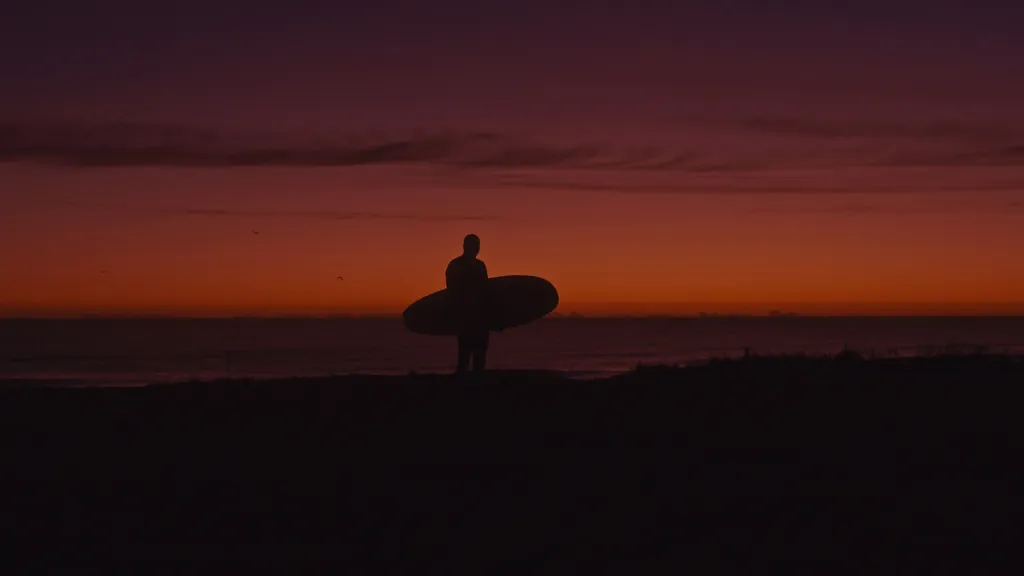
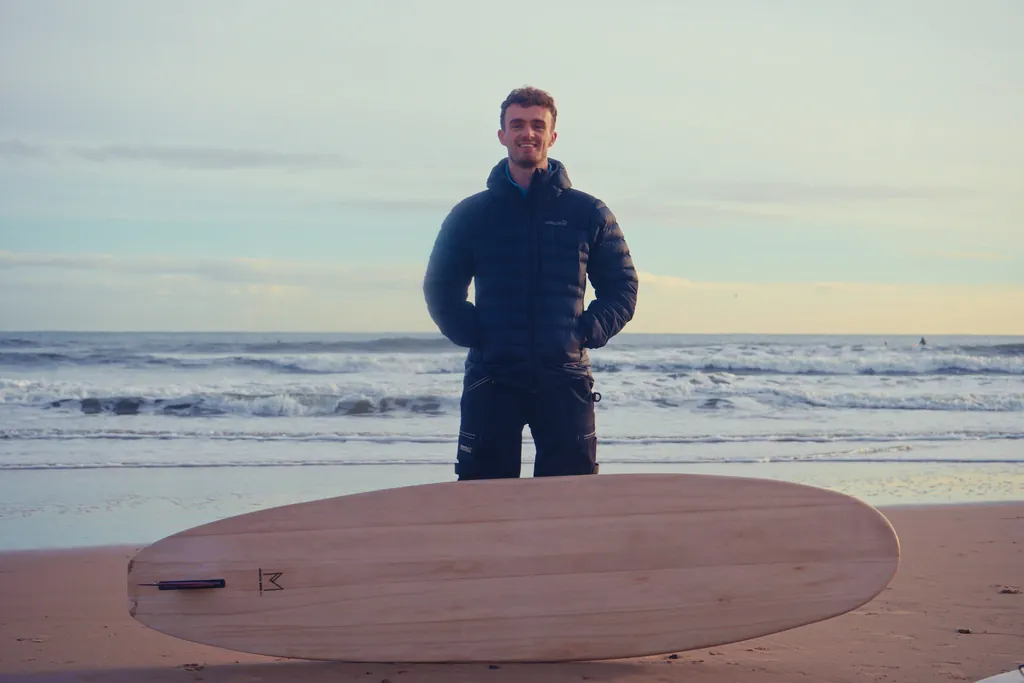
Patience
I spend most evenings in my parents' garage with the door rolled open, letting the cold air drift in. The space isn't perfect – it's too small, the mitre saw outfeed is forever just a bit too short, and I have to wheel the bandsaw onto the driveway just to use it. But the space is mine. I've shaped it around my hands and habits, pegged tools where I want them, shoved pencils into drawers only I can find, and worn grooves into the floor where I've paced, planed and sanded my way through countless ideas.
Out of this borrowed, imperfect space, I've built Mångata Wood Co. – a tiny wooden surfboard workshop trying to make a small but meaningful shift in the surf culture in our region.
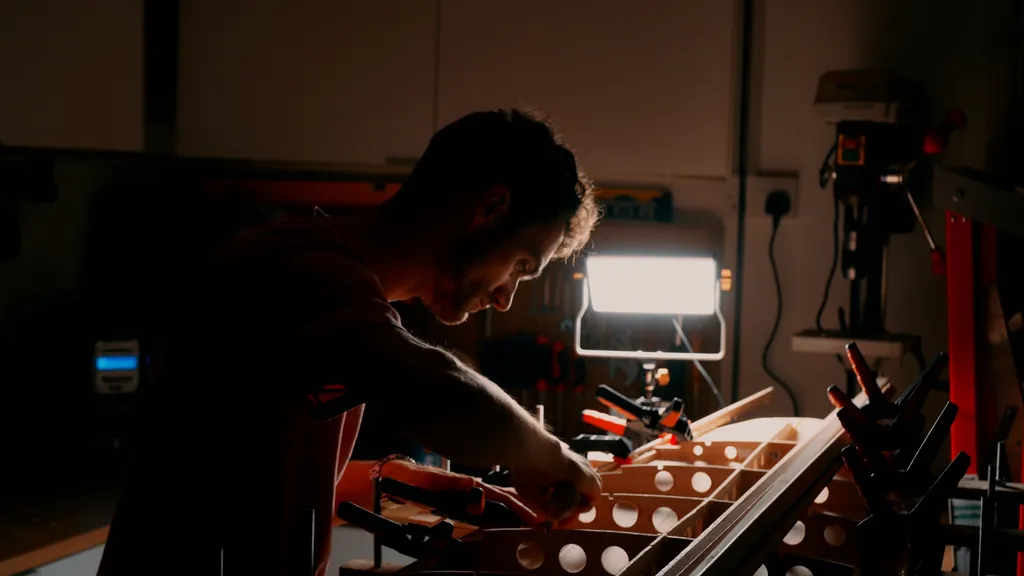
My journey started long before the boards. Woodworking came first: the fascination with grain, weight, texture, the way wood never stops feeling alive. Over time I realised I didn't just like working with wood – I respected it. It felt honest. Renewable. Grounded in the natural world in a way that PU foam never could.
And at some point, I couldn't ignore the contradiction anymore: surfing feels like an environmentally conscious sport, but so much of it relies on petrochemicals, plastics, fast consumption and disposable habits. We treat boards like cheap appliances – ride them hard, snap them, replace them, repeat. If your coat tore every winter, you'd question the build quality. If your car broke that often, you'd complain. But when a board snaps, we shrug and order another one.
I wanted to build something that pushed back against that cycle. A small act of resistance, maybe. Something slower, more intentional, more connected.
Wood offered a way in. Wooden boards are stronger than foam, longer-lasting and – if you ask me – endlessly more beautiful. But the magic is something deeper: a wooden board feels alive under your feet. It has tone, warmth, a certain morale to it. When you ride one, you'll know what I mean.
The build process itself forces you to slow down. There are no shortcuts in traditional wooden board construction. You can't rush milling the timber; you can't speed through building the rails or sanding the deck. Each stage asks for patience, and every time I see the outline emerge or the wood grain pop after its first coat, I get the same burst of excitement I did when I built my very first one.
It's a feeling I want to share. Part of my dream is to eventually deliver courses teaching people how to build their own boards – a board they can ride for decades, maybe pass on to their kids. A board with a story built into its structure.
The irony is that I've poured what should have been my house deposit into tools and machinery instead. But I don't regret it. I've built a space where I feel more relaxed than anywhere else. A space whose only purpose is to make things because I want them to exist. A space where I can put on the kettle, brush sawdust off the bench and lose an entire evening without noticing.
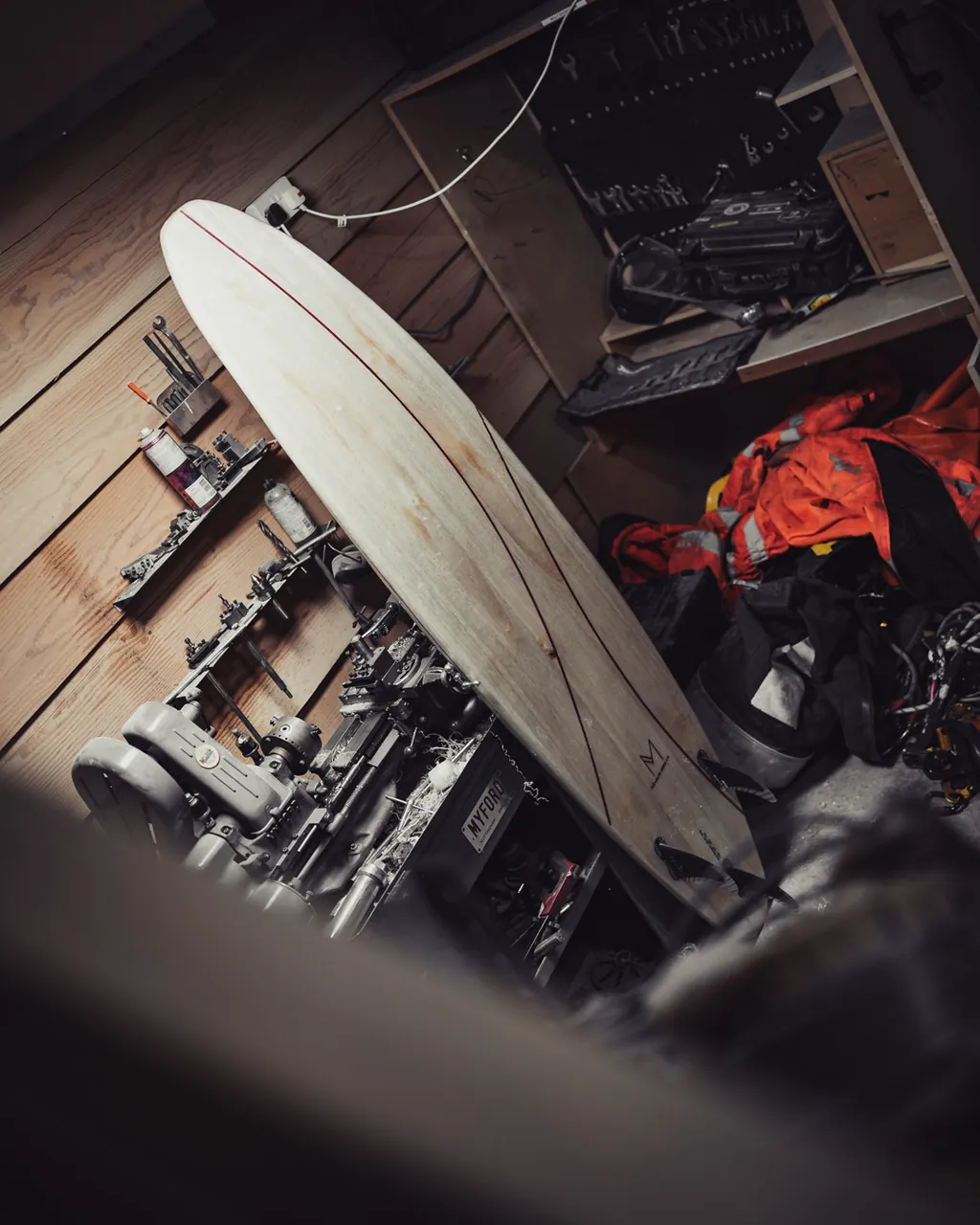
I know wooden boards have their scenes in places like Cornwall and areas of Portugal, but here in the North East? Hardly anyone is doing it. Maybe that's part of why I'm so driven – I want to bring this alternative way of thinking, this slower and more intentional approach to surfing. I want people here to feel what it's like to ride something they built. To feel more connected, both to the board beneath their feet and to the craft that shaped it.
Mångata Wood Co. isn't some polished brand. It's a young lad in a cold garage trying to build something that lasts – something that asks surfers to think a little differently. To pause. To question the disposable habits of our sport. To slow down and craft instead of consume.
Maybe it's optimistic. Maybe it's naïve. But every board I build feels like a small step towards a better version of surfing – one that honours the natural world we depend on, and that reminds us that beauty often comes from the slow, patient work done in small, imperfect spaces.
Sam Bullock